
Why education in Japan and Bangladesh, and why now? Our organisation’s origins and future
In April 2026, in a time of rapid change, why develop educational activities simultaneously in Japan and Bangladesh, two places so distant in geography and circumstances? We spoke in depth with our representative about the deeply felt origins of the organisation and the new educational horizon we envision.
Q1: What led you to establish the organisation?
“A mud-covered notebook handed to me in a backstreet of Dhaka”
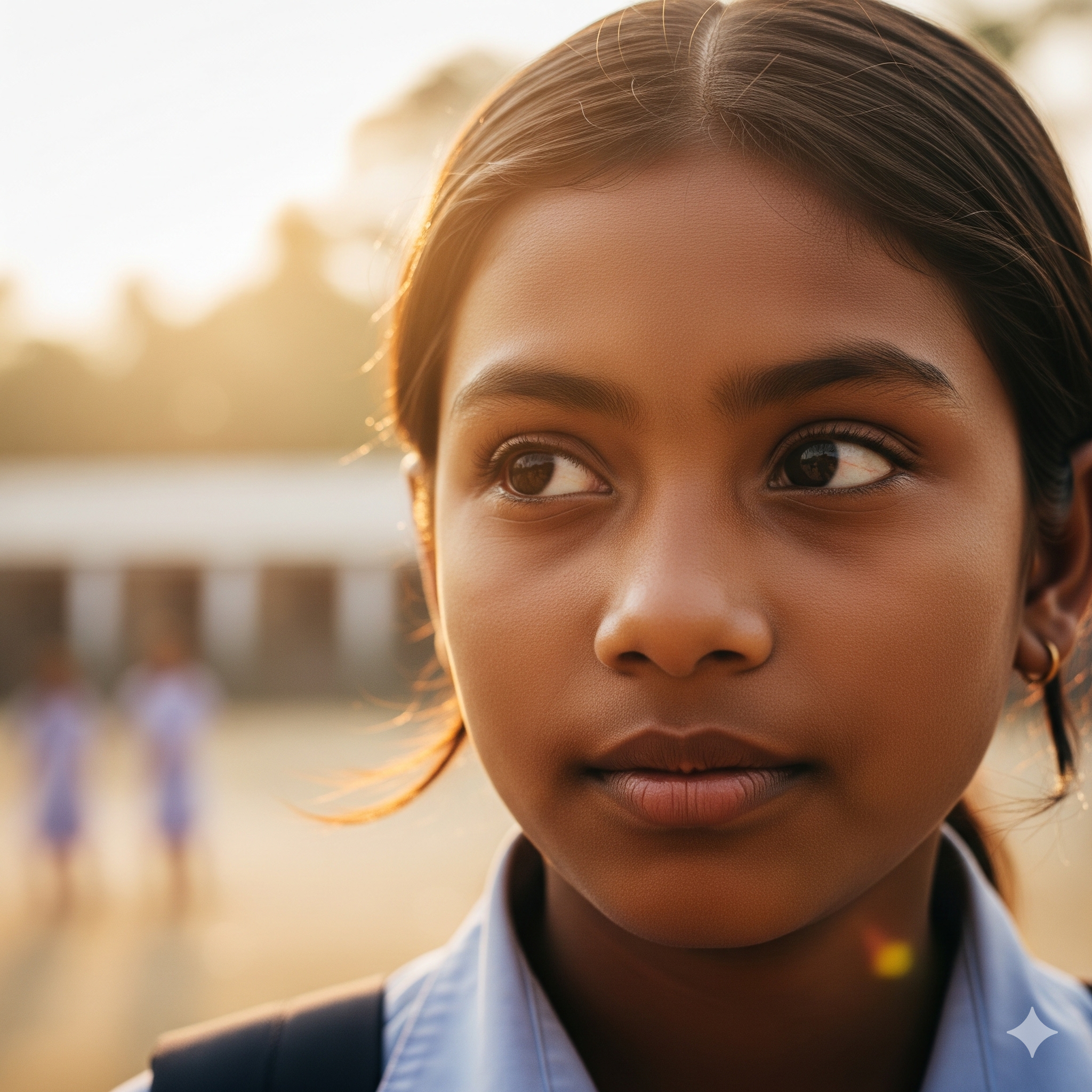
It all began on a rainy day several years ago, during a visit to Dhaka, the capital of Bangladesh. In a narrow alley in an informal settlement, I met a girl of about ten who collected rubbish to help support her family. She held a worn notebook as though it were precious. When she showed me inside, I saw ABC letters, presumably taught by a schoolteacher, written so firmly that the paper almost tore.
An overwhelming thirst to learn, like dry ground absorbing water. Seeing it stirred something deep inside me.
Back in Japan, however, I saw children quietly closing themselves off despite living in comfortable surroundings, saying they could not find a reason to learn or believe in themselves.“A country seeking learning in order to live” and “a country beginning to lose sight of the meaning of living.” Becoming convinced that we could not truly change the future without facing both challenges was a major reason for founding the organisation.
Q2: Why do Japan and Bangladesh need to be connected?
“Dialogue across borders breaks down rigid assumptions”
At first these may seem like unrelated challenges, but we believe the two settings can complement each other.
- From the children of Bangladesh to Japan: Seeing children learn with shining eyes even in difficult circumstances strongly challenges young people in Japan to reconsider why they learn and how they want to live.
- From Japan’s resources to Bangladesh: By sharing educational curricula and digital knowledge developed in Japan, we can offer children in Bangladesh the tools and skills to break the cycle of poverty and connect with the world.
Education no longer exists entirely within one country. Children in different circumstances can learn together online and through projects, broadening each other’s perspectives. We believe mutual empathy — “They are working hard, so I will take another step too” — can become a breakthrough in addressing the educational challenges of both countries.
Q3: What kind of society do you hope to create?
“A society where birthplace does not determine the limits of possibility”
We aim for a society in which everyone can realise their full potential, unrestricted by their circumstances or nationality.
Whether born in a rural Bangladeshi village or a regional Japanese city, everyone should be able to steer their own life with the right education and opportunities. We also want a society that recognises diverse values. We hope to create places where a child’s unique talents and individuality are respected, beyond test scores alone.
What we are sowing now are only small seeds of learning. But in years and decades they can become a great forest crossing borders, where the next generation of children can safely share their dreams in its shade. We are sincerely working to bring that future into being.
[A final message to everyone who walks alongside us]
We can never accomplish this challenge through our efforts alone. With our establishment in April, we are seeking companions who will work alongside us to create the future.
Donations, volunteering or spreading this vision — any form of involvement is welcome. Will you join us in writing the next pages of the notebook held by the girl in Bangladesh, and the maps of the future drawn by children in Japan?
We sincerely look forward to your warm support.