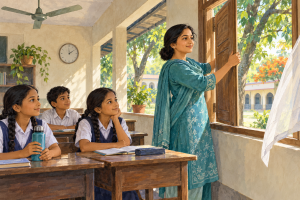
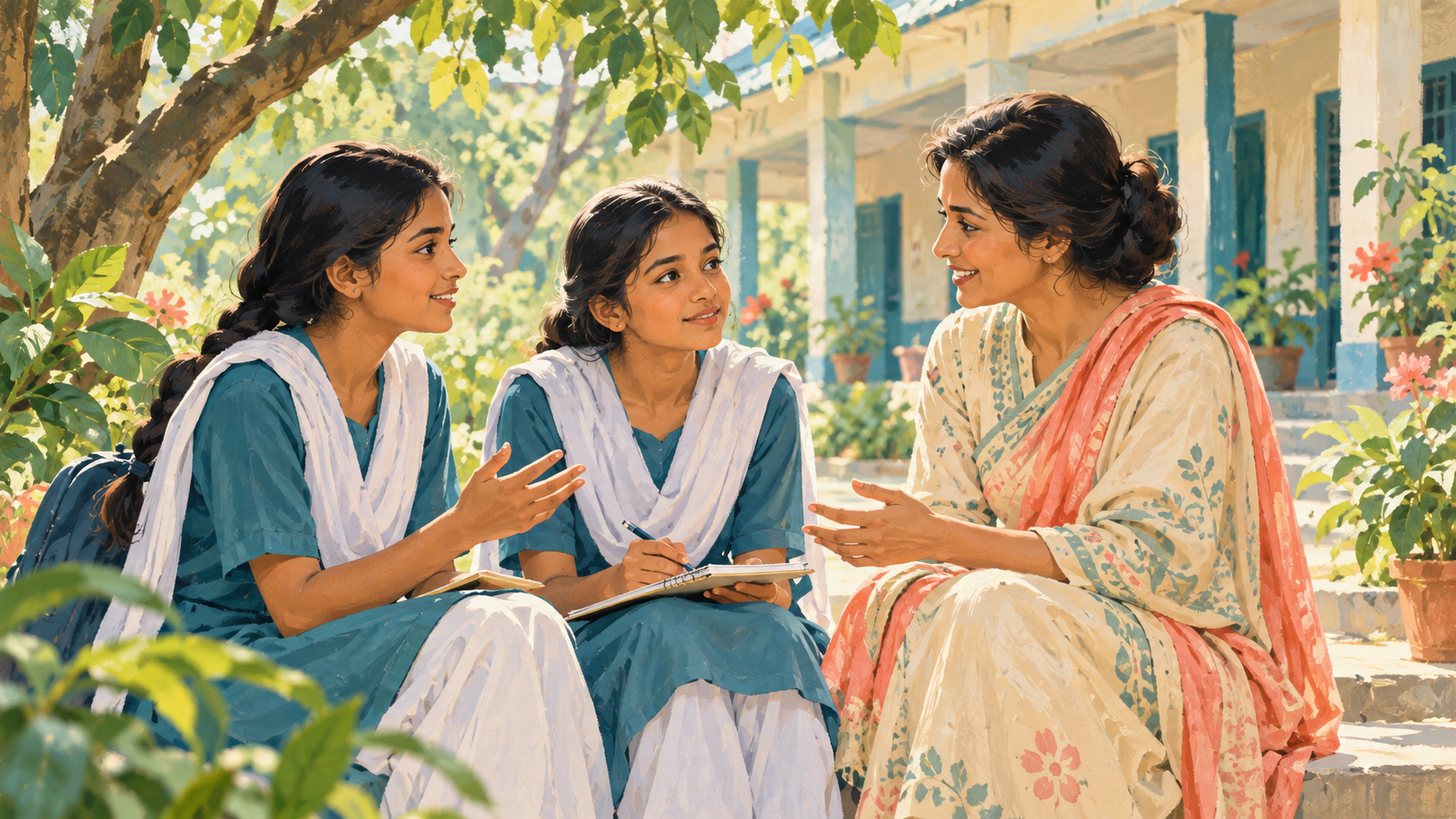
Supporting girls’ education in Bangladesh means creating school environments where girls have privacy, feel respected and can express their own needs and ambitions. During adolescence, reliable information about menstruation and understanding from others also matter. This article focuses on dignity and choice, drawing on public sources to explore what supportive school environments can involve.
Start with girls’ own choices
A March 2025 statement from UNICEF and its partners on Bangladesh calls for investment in girls’ education and skills, alongside their participation in decisions. Educational opportunities should include listening to what girls want to learn and how they imagine their futures. Source: UNICEF, UN Women and Plan International statement.
The perspectives below are general considerations for support. They do not imply that every school or family in Bangladesh faces the same circumstances. Needs differ according to location, age, disability and other factors.
Menstrual dignity belongs in education
In June 2025, UNICEF Bangladesh described how stigma and a lack of safe, hygienic spaces can disrupt girls’ school lives. It outlined initiatives involving menstrual supplies, disposal facilities and education for girls and boys. These are UNICEF and partner initiatives, not KIZUNA programme results. Source: UNICEF Bangladesh’s explanation of menstrual hygiene work.
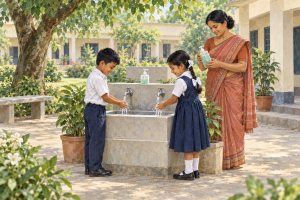
When considering facilities, it helps to ask whether students can comfortably use them, beyond simply checking that a toilet exists. For example, students could help assess water and soap, privacy and convenient handling of menstrual materials. Nobody should have to explain a personal difficulty in front of classmates to have it taken seriously.
Connect information, facilities and understanding
UNICEF organises its menstrual hygiene work around social support, knowledge and skills, facilities and services, and access to materials. It also emphasises developing solutions with girls with disabilities and others whose needs may be overlooked. Source: UNICEF: Menstrual hygiene.
Applied to school life, this suggests considering who can answer questions and who will replenish supplies or maintain facilities. Learning opportunities for boys and adults can also help schools address teasing. Responsibility for a respectful environment belongs to the wider community, rather than resting on a girl’s ability to cope alone.
Include girls in conversations about their futures
UNICEF’s research describes a relationship between child marriage and schooling, noting that decisions about leaving school and marriage are sometimes made together. This calls for understanding family and community circumstances, rather than assuming a single cause. Source: UNICEF: The power of education to end child marriage.
Girls are also active participants in shaping change. A 2021 UNICEF story about adolescent clubs in Bangladesh describes young people learning with peers, seeking guidance and developing ambitions. One lesson to draw from these examples is to consider both a place to speak and people who will listen. Source: UNICEF Bangladesh’s introduction to adolescent clubs.
Frequently asked questions
Why discuss toilets and menstruation in an education article?
Usable facilities and accurate information are part of the conditions for participating in lessons. Menstrual needs should be considered an ordinary part of school life, without shame.
Is girls’ education only a matter for girls?
Girls’ wishes should guide the conversation, with parents, teachers, boys and community members also involved. Facilities and other people’s behaviour are conditions a girl cannot be expected to change through individual effort alone.
Is this a report on a KIZUNA programme for girls?
No. This is an explainer based on international organisations’ public information. See KIZUNA’s support activities for information about its work. To discuss cooperation around girls’ education and what is currently possible, please contact KIZUNA.
For the broader context, read our previous article, Education Support in Bangladesh: Helping Children Keep Learning.
This explainer uses public sources. It is not a field report or an evaluation of a specific programme. Sources reviewed: 30 September 2026.