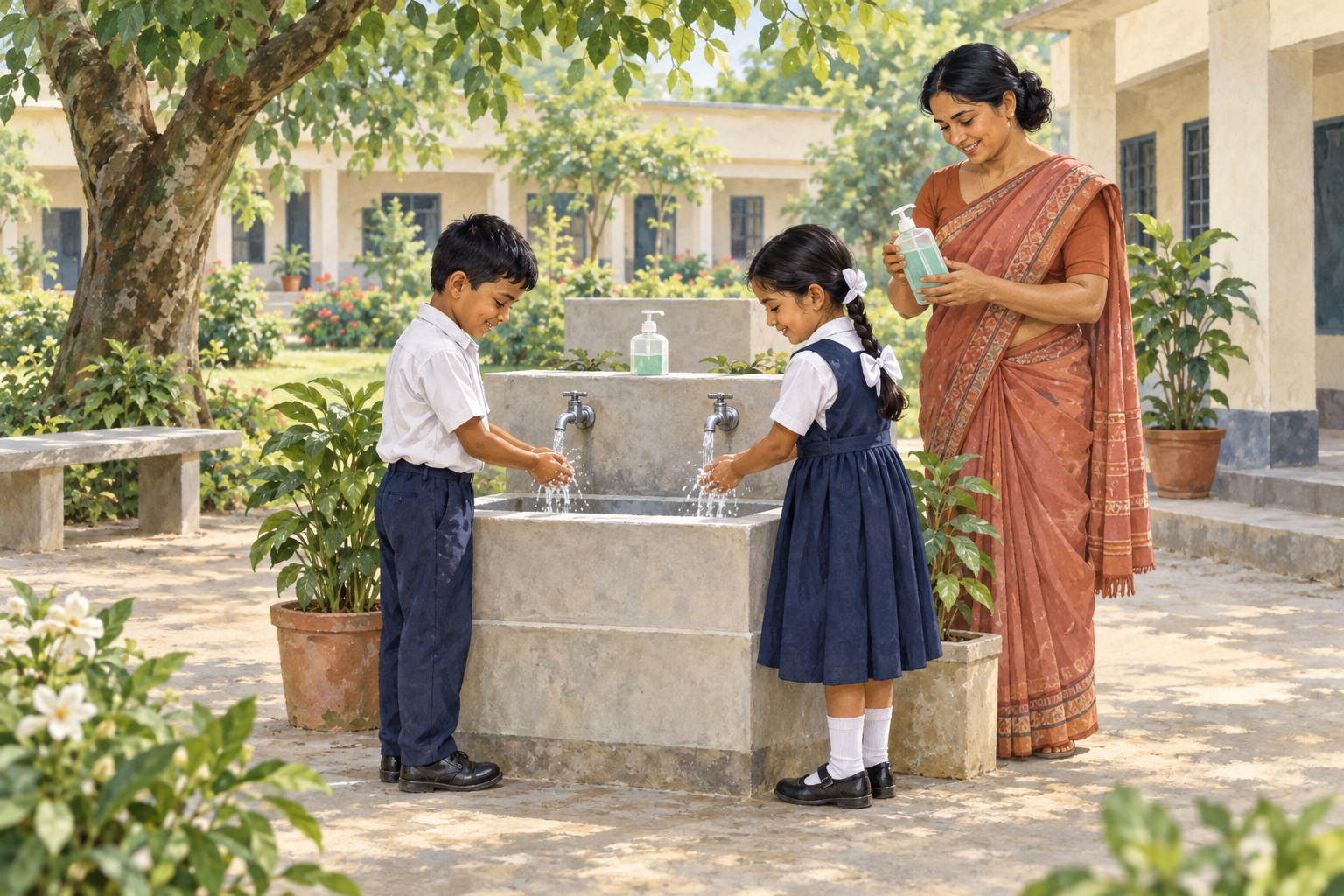
Supporting water and handwashing at school means more than installing equipment: water must be available when needed, soap must be present, and children must be able to use the facilities. This article considers education in Bangladesh through everyday upkeep of drinking-water and handwashing facilities. It focuses on keeping them usable, separately from meal preparation or toilet construction.
Distinguish having facilities from being able to use them
UNICEF Bangladesh emphasizes service quality and sustainability in its water and sanitation work. It identifies water quality as a concern alongside access to sources. Source: UNICEF Bangladesh, Water, sanitation and hygiene.
WHO/UNICEF monitoring defines basic school hygiene services as handwashing facilities with water and soap available at the time of the survey. It does not simply count installations. Source: UNICEF Data, WASH in schools.
The following are examples for school planning, not reports of KIZUNA programmes or particular schools. Water quality and technical decisions should be checked with responsible local agencies and specialists.
Where and when is drinking water available?
For example, identify the points designated for drinking water and check whether they can be used on school days, are unlocked and allow containers to be filled. A source on the premises is not enough if children cannot use it when they need to.
Where drinking water and water for cleaning come from different points, make the distinction clear. Check that children understand the signs rather than relying only on text. Clear-looking water alone is not evidence of safety.
The school can also clarify who requests water-quality checks, receives results and communicates decisions about use. If water is unavailable, arrange alternative supply and information in consultation with the responsible agencies. Do not ask children to taste water to assess it or improvise chemical treatment at school.
Make soap replenishment and fault reporting routine
Check for soap as well as running water. If a check before lessons reveals a shortage, staff should know whom to tell and where to obtain replacements. Supplies in storage are little help if the only key holder is absent, so handover arrangements matter too.
Create a route from reporting a broken tap or leak to the person responsible for repairs. Brief notes of location, fault, reporting date and progress can show whether action followed the report. Children reporting a problem is different from children being responsible for repairs.
Costs continue after equipment is purchased. Include soap, spare parts, inspections and repairs in school planning. With donated equipment too, check whether parts are available locally and whom to contact for help, so ongoing upkeep can be planned.
Check reach, operation and access
Can children reach the tap, operate it without excessive force and queue without blocking a passage? Consider whether younger children and those with mobility needs can use it without always relying on someone else. Ask users what is difficult and discuss changes with the responsible staff.
Puddles and drainage faults can also obstruct use. Adults should inspect them and distinguish cleaning tasks from equipment repairs. Rather than placing children on unstable platforms or asking them to move awkwardly across wet floors, consider changes to the facilities.
Review use after the completion photographs
Records can note unusable points, missing supplies and the time taken for repairs. These reveal everyday usability beyond installation counts. When a child reports a difficulty, ask when and where it happens without blaming them, and connect the information to replenishment or repairs.
Water and handwashing facilities need attention after installation. When staff change, pass on checking procedures, supply locations and repair contacts. A system that addresses small shortages helps equipment remain part of everyday school life.
Frequently asked questions about school water and handwashing
Does adding taps create a good handwashing environment?
Numbers alone cannot tell us. Check whether water and soap are present when needed and whether replenishment and repairs continue.
Is running water necessarily suitable for drinking?
Availability and suitability for drinking are different questions. Check the status of drinking-water verification with the school and responsible agencies, rather than judging by appearance or taste.
Explore KIZUNA’s current activities on our support programmes page. To discuss contributing to education, please contact us.
Sources checked: 8 October 2026.