Learning to read digital information involves more than operating a screen: it means asking who is communicating, for what purpose and with what evidence. This article considers education for children in Bangladesh through ways to check information and withhold judgement, rather than simply choosing to believe or distrust it.
Develop the habit of pausing before using information
In February 2025, UNICEF Bangladesh called for digital literacy education that helps young people critically assess online information and identify misinformation. Source: UNICEF’s statement on young people and online information.
UNESCO supports media and information literacy to help people engage critically with information and navigate online environments safely. Source: UNESCO on media and information literacy.
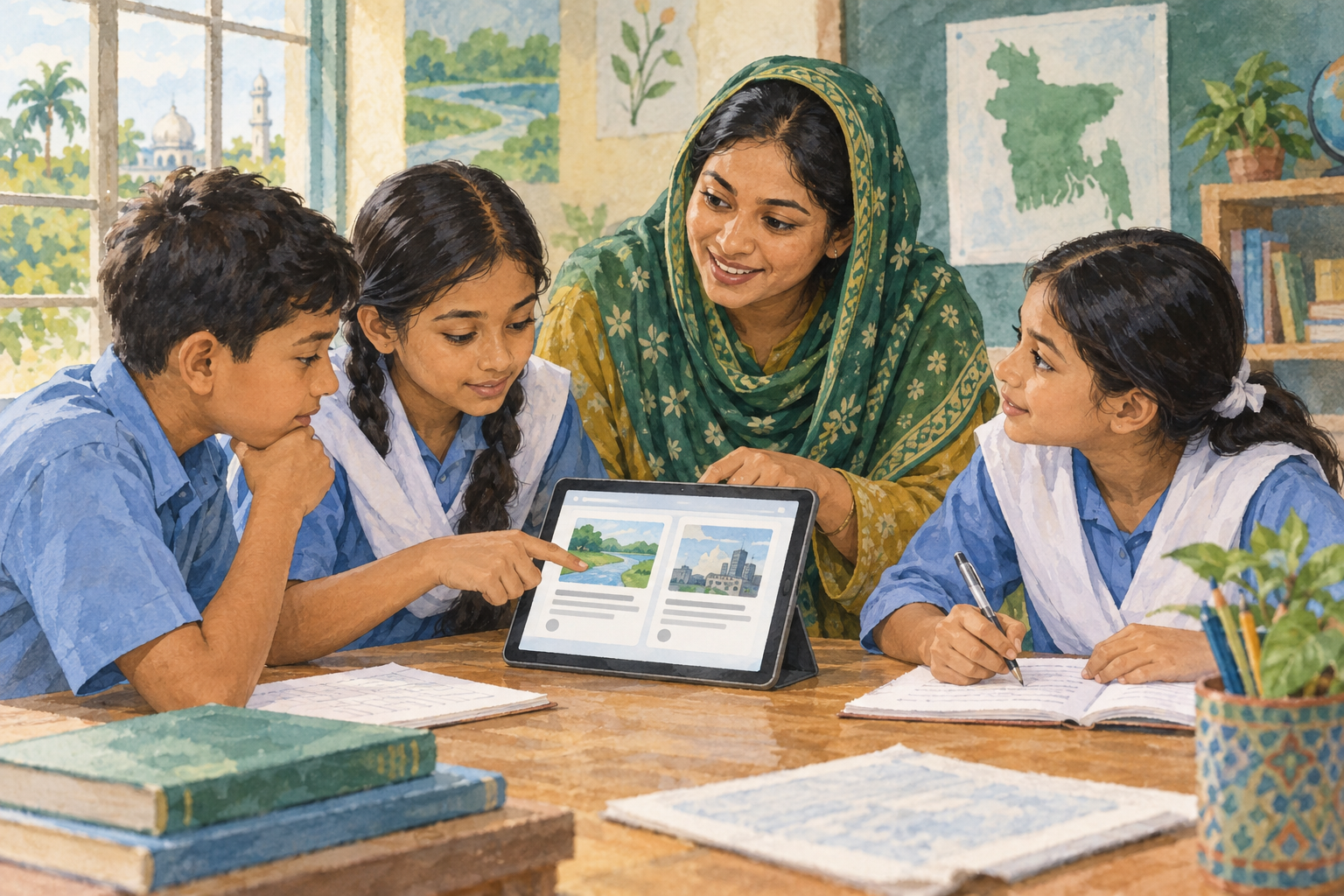
The following are teaching examples, not KIZUNA programmes or materials used in every school in Bangladesh. Depending on age and reading ability, lessons can begin with fictional posts or paper cards prepared by a teacher.
Distinguish the person sharing a post from its original source
For example, prepare a fictional exhibition post saying “Sunday at 2 p.m.” First ask whether the writer is the organiser or someone passing on what they heard. Trusting the friend who forwarded it is a separate issue from whether the time is correct.
Next, look for the organiser’s announcement or the original article. Comparing the source, date, location and updates can reveal the possibility that an old notice was shared again. A screenshot alone may omit the original context or later corrections.
Do not stop checking because something ranks high in search results or has been widely shared. Several pages repeating the same post do not necessarily provide independent corroboration. Trace what their information is based on.
Distinguish factual claims, opinions and advertising
In a practice text, “The exhibition starts Sunday at 2 p.m.” makes a claim about a time that can be checked; “The most interesting event of the year” expresses an assessment or reaction. A statement phrased as a fact is not automatically true. Opinions can be questioned for their reasons, but people need not share the same preferences.
For a product post, look at links to sellers and advertising or sponsorship labels. Avoid assuming that every advertisement is false or every personal post neutral. Consider who benefits and how. A single text can mix personal impressions with promotion.
Read a photograph or video separately from its caption. Even an authentic image can convey a different meaning if presented as an event from another place or time. A convincing appearance does not establish when or where it was made.
Do not rush to share what remains uncertain
A lesson record can have three sections: what has been checked, what remains unknown and what source to consult next. If a source cannot be found, treat the information as unverified rather than immediately declaring it false. Practise choosing not to circulate it until it can be checked.
When a post provokes surprise or urges immediate sharing, first name the feeling it creates. Then calmly check it with a trusted adult such as a teacher. Do not set tasks that encourage children to attack a poster or spread misinformation to test others.
With generative AI answers, distinguish fluent writing from accuracy. Check that cited materials exist and actually support the claim. A teacher can prepare examples for discussion without asking children to enter personal information.
Look at the checking process, not only right-or-wrong scores
Finally, ask children to explain what they consulted and what evidence could change their view. Revising an initial opinion can reflect judgement responsive to evidence. The goal is to check and use information for a purpose, rather than distrust everything.
Frequently asked questions about reading information
Does every child need a device for the lesson?
Printed cards showing posts, original announcements and advertising can be compared. Start with the relationships between pieces of information, then move to checking on real screens as available resources permit.
Must children search for real misinformation?
They need not start with unrestricted searches. Teachers can prepare fictional examples without identifiable people, allowing practice in checking sources and evidence without exposure to harmful posts or accusations against real individuals.
Explore KIZUNA’s current activities on our support programmes page. To discuss contributing to education, please contact us.
Sources checked: 14 October 2026.