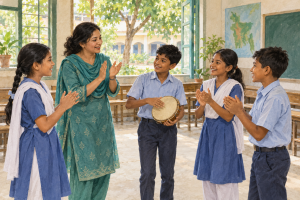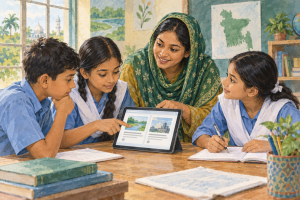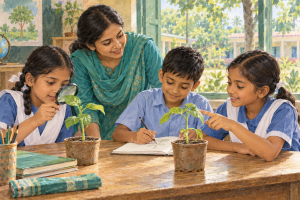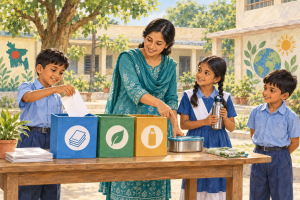
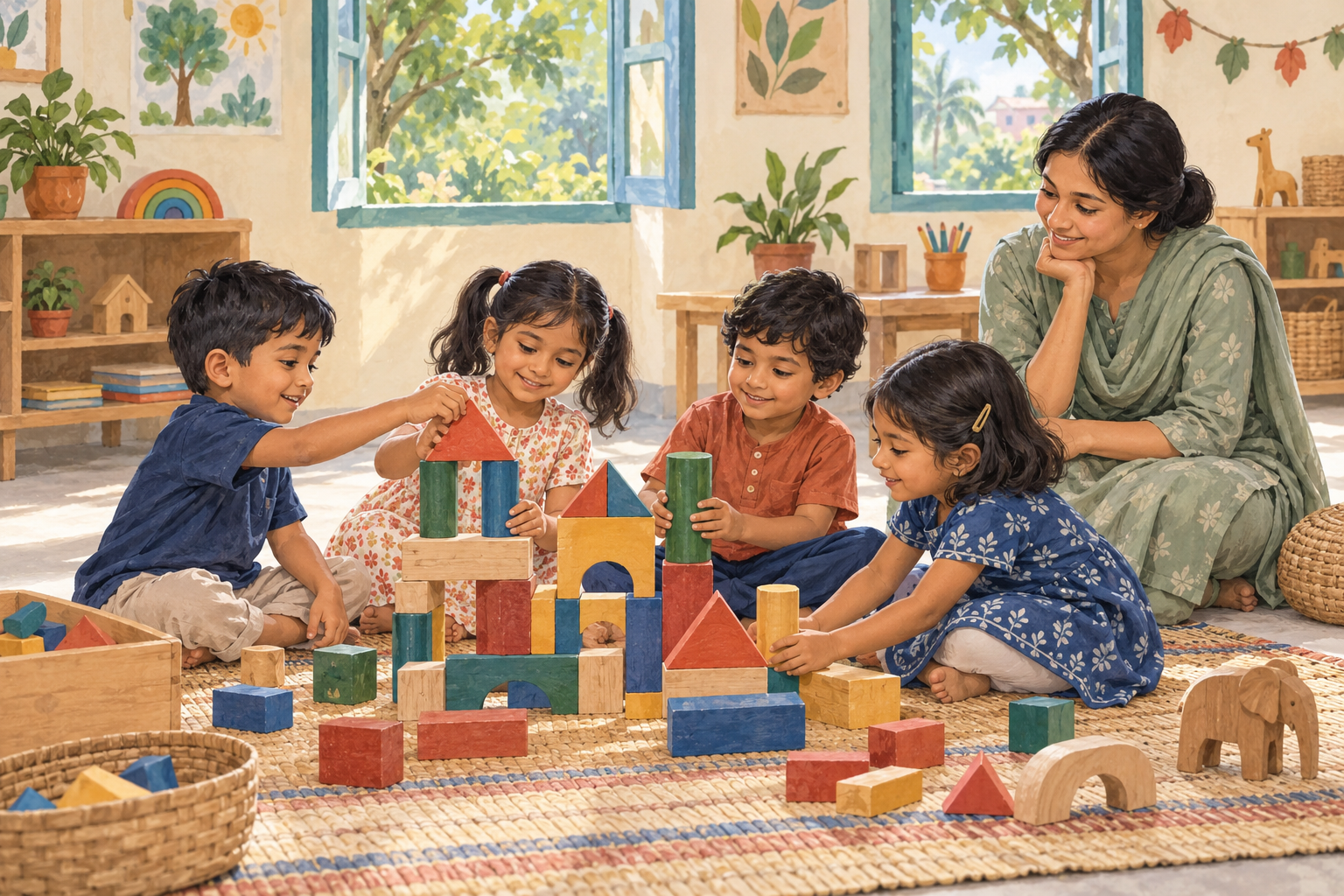
Play-based preschool learning values time for children to choose, experiment and change their ideas. Rather than asking everyone to produce an identical object, adults can create space for different interests. This article considers preschool education in Bangladesh through choices in play, the environment and attentive adult support.
Play-centred initiatives in Bangladesh
BRAC describes its Play Labs, operating in Bangladesh and other countries, as a culturally relevant model of play-based learning. These are BRAC’s activities, not KIZUNA’s achievements. Source: BRAC, Early childhood development.
UNICEF’s explanation of free play emphasizes children choosing materials and how to play. Although written for families, it offers a useful perspective on preschool playtime. Source: UNICEF, What is free play?.
The following are examples for planning educational settings, not descriptions of particular centres or evaluated lesson protocols. Local staff should select approaches suited to children’s ages, development and surroundings.
Leave room for children to choose what to do
For example, provide drawing, pretend play and activities combining shapes, allowing children to choose where to begin. The same materials can inspire different games. An idea does not need immediate correction simply because it differs from an adult’s model.
In pretend play, one child might use an empty box as a parcel and another as a shop counter. Asking what it represents reveals their thinking. Look beyond the finished shape to how they want to use it and what they changed along the way.
Arrange space for activity and for calm
When active play overlaps with seated activities, children may collide or knock over unfinished creations. Rugs or furniture arrangements can mark areas while leaving clear access routes. Check that adults can see what children are doing.
Place suitable quantities of materials within reach. Even everyday materials require adult checks for cleanliness, fragility, sharp edges and small parts that could be swallowed. Low cost does not mean every material is appropriate.
Consider a place to pause away from noisy activities. Some children may prefer to watch before joining. Rather than expecting everyone to participate with equal energy, look for a comfortable way for each child to begin.
Observe without deciding the answer in advance
If adults remake everything while a child is experimenting, the child’s own ideas become harder to see. When pretend-play materials are missing, first ask what the child wants to do. Leave time to consider using something else or exchanging roles.
Observation does not mean leaving children unattended. Adults respond to danger or significant distress. If children compete for an item, listen to both wishes and explore turns or alternatives together rather than simply deciding a winner.
Look beyond the objects shown in photographs
Notes can capture children making choices, trying a different approach or negotiating roles with friends. These processes are missed by judging only how neatly something is made. The purpose is to inform the next setting and materials, not rank children against a single standard.
A child passing a prop to a friend to keep a game going may leave no trace in a photograph of the finished work. A short note can help adults prepare to continue the game or add props for a new role. Use records to shape the environment rather than simply increasing their volume.
At the end of playtime, give notice rather than suddenly clearing everything away, and consider what to do with games children want to continue. If storage space is available, creations might be kept for a return visit. Completing something every session need not be the only goal.
Frequently asked questions about learning through play
Does free play mean adults do nothing?
Adults arrange the environment, check safety and engage when needed. Supporting children is different from prescribing every move.
Does every session need a visible finished product?
Not necessarily. Pretend-play exchanges and trying a different approach also matter. Look at children’s interests and involvement, not only whether they produced an object.
Explore KIZUNA’s current activities on our support programmes page. To discuss contributing to education, please contact us.
Sources checked: 8 October 2026.