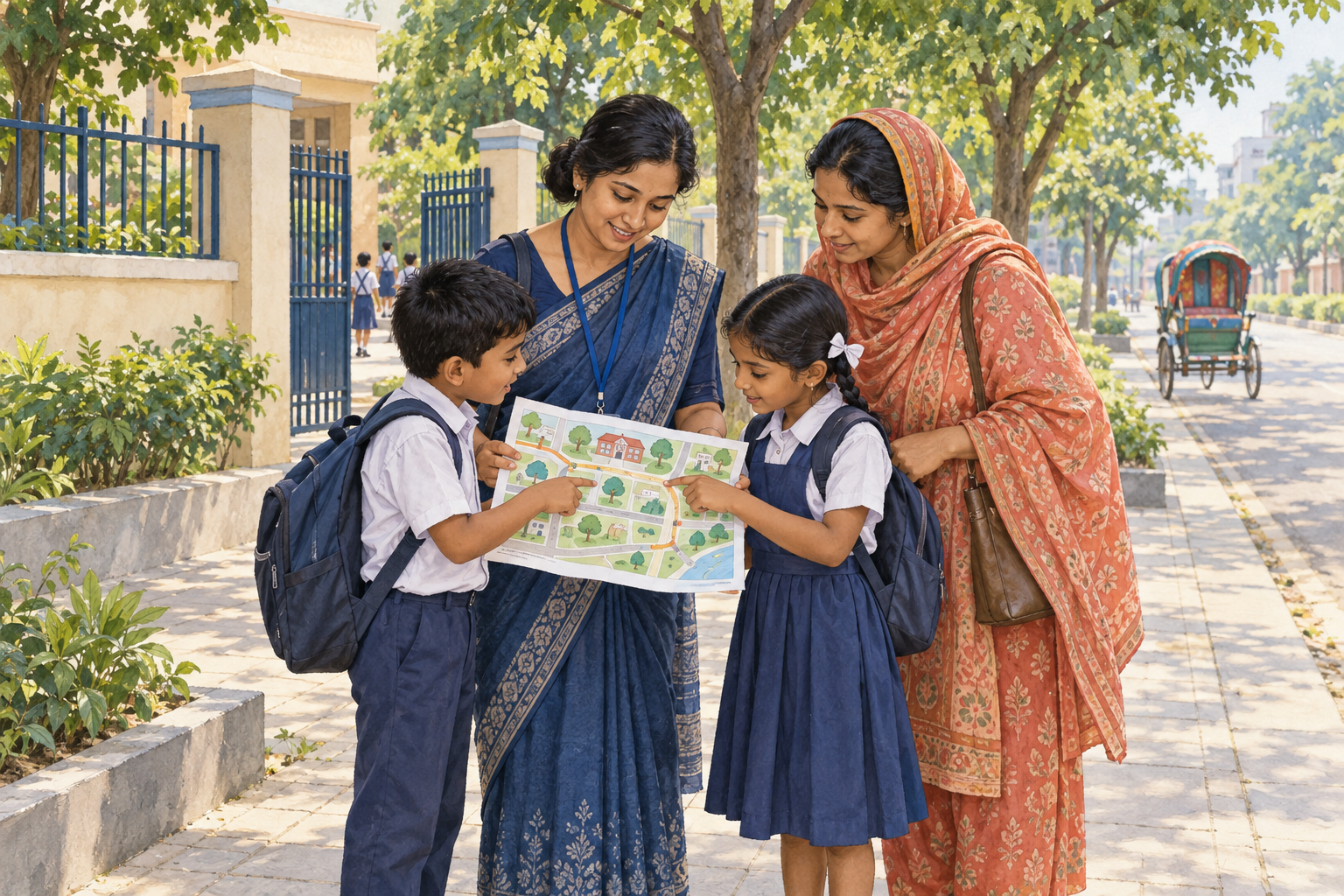
Safer journeys to school require attention not only to children’s behaviour, but also to walking space, visibility and school drop-off arrangements. This article looks at education in Bangladesh through everyday school routes. It concerns what adults can check and discuss during normal school travel, rather than evacuation during disasters.
Road conditions are part of access to learning
In 2023, the World Bank announced the launch of a Bangladesh road safety project with plans for footpaths and crossing facilities in selected areas. These were launch plans, not confirmation that works around all schools were complete. Source: World Bank Bangladesh Road Safety Project announcement.
WHO explains that children’s smaller stature can make it harder to see traffic and be seen by drivers. Improving road infrastructure is among its recommended measures. Source: WHO, Road traffic injuries: Children.
The following are planning examples for schools and caregivers, not assessments of particular roads or reports of KIZUNA programmes. Actual routes and infrastructure changes should be discussed with local schools, road authorities and other responsible parties.
Look beyond distance on a map
Adults might sketch routes to school and mark gaps in footpaths, vehicle entrances and places requiring a crossing. Such a map helps identify where people walking and vehicles intersect, rather than simply finding the shortest route. Distance alone should not determine the choice.
Consider both arrival and departure times. A place that is clear in the morning might be blocked by parking or deliveries in the afternoon. From a safe position, adults can look at whether usable walking space remains at the relevant time and whether anything blocks the view, rather than considering width alone.
Hear children’s experiences in a safe setting
Instead of asking only “where is it dangerous?”, try questions about daily experience: “where is it difficult to see vehicles?” or “is there anything difficult about where you wait?” Classroom maps and drawings make it possible to listen without taking children to hazardous locations for an inspection.
A junction that looks clear to an adult may be obscured by parked vehicles at a child’s height. Children’s accounts can help adults identify overlooked places. Do not make road surveys or vehicle-speed measurements tasks for children to carry out alone.
Consider waiting and drop-off locations separately
Children arriving on foot, vehicles and waiting adults may gather outside a school at the same time. The school and those providing transport can check where people wait, where passengers get in and out, and whether the walk to the gate overlaps with vehicle movements. A convenient stopping place might also block a walking child’s view.
When arranging accompaniment or supervision, define locations, times and handovers. Having an adult present is not the end of the discussion: clarify what each person is responsible for checking. Directing traffic on the road requires consultation with authorized, trained personnel in accordance with local arrangements.
Turn observations into specific requests for improvement
Instead of only saying “the road outside school is dangerous,” record the location, time and situation. For example, “waiting adults and vehicles gather in the same space at departure time and block the walking route” provides a basis for discussing waiting areas or drop-off procedures.
Where footpaths, crossings or vehicle speeds need attention, involve road authorities rather than leaving decisions to the school alone. Separate the responsibilities of road users and those managing the road; do not expect children’s vigilance to solve everything. Discuss the required response with responsible officials rather than installing homemade signs or obstacles.
After changes, check whether the walking route becomes obstructed again and whether people use the agreed waiting area. Construction and access to shops can change how a road is used. Dated notes of observations also help explain concerns at the next discussion.
Frequently asked questions about safer school travel
Does checking a route guarantee that it is safe?
No. Checking helps identify concerns and inform discussions about improvements or route choices. Traffic and road use change, so review arrangements with local responsible parties rather than treating a single inspection as sufficient.
Is teaching children traffic rules enough?
Alongside learning rules, consider walking space, visibility, vehicle movements and any necessary accompaniment. Improvements that adults and road authorities can make should not depend solely on children’s attention.
Explore KIZUNA’s current activities on our support programmes page. To discuss contributing to education, please contact us.
Sources checked: 7 October 2026.