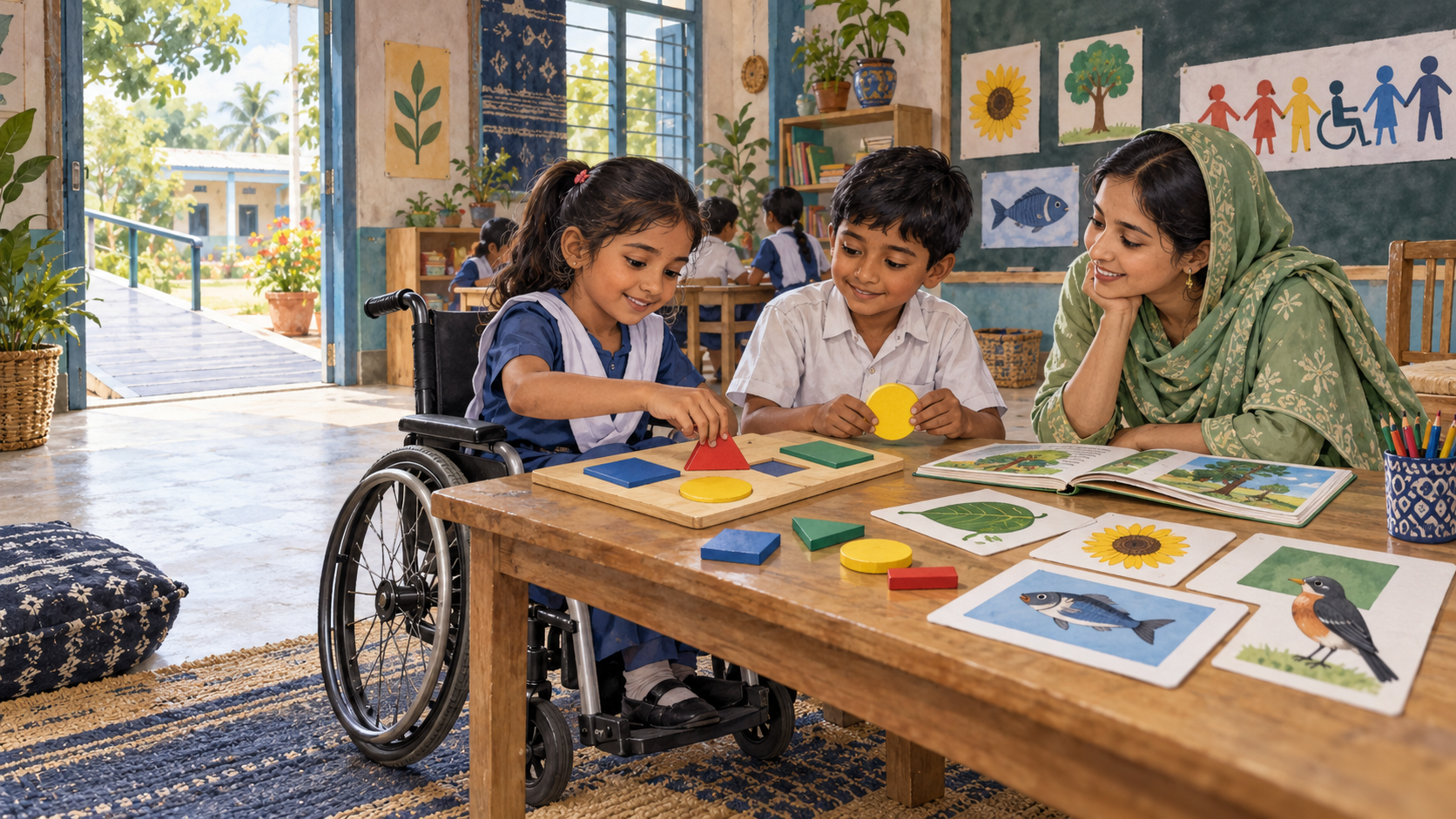
Inclusive education aims for children to learn together, regardless of disability or other differences, with support that responds to each learner. In education support in Bangladesh, access to a classroom matters alongside being able to use materials, participate in lessons and communicate ideas.
Identify barriers in the learning environment
UNICEF explains that inclusive education requires teacher training, improvements to school facilities and accessible materials, as well as action against stigma and discrimination. This approach looks at changing surrounding systems rather than asking children alone to overcome barriers. Source: UNICEF: Inclusive education.
In Bangladesh, a UNICEF report published in July 2025 used a self-reported facility assessment to map 211 facilities across 25 districts and identified challenges in accessibility, service quality and coordination for children with disabilities. It covered facilities offering services such as education, rehabilitation and social protection; it was not an assessment of every school in the country. Source: UNICEF Bangladesh’s services mapping report.
Move from distributing materials to making them usable
The following are practical examples for considering materials and lessons. They are not descriptions of KIZUNA projects or conditions in every Bangladeshi school. Approaches should be chosen in consultation with children, caregivers, teachers and relevant professionals.
Check how learners receive information
Options include adjusting text size and spacing, describing diagrams in words, or supporting spoken instructions with text and pictures. Where Braille, sign language or other support is needed, establish which methods the learner uses and what support the school can provide. A shared disability label does not mean children need identical materials.
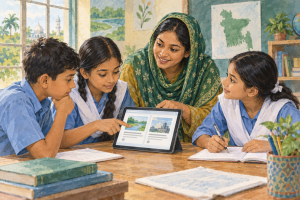
Digital materials are not automatically accessible once distributed. Try them with the people who will use them: can text be read aloud by assistive software, can the content be understood without relying solely on sound, and are the controls clear? The key question is whether the learner can reach and use the relevant content, rather than how many features are offered.
Offer appropriate ways to demonstrate understanding
For example, in a lesson about plant growth, a teacher could consider allowing children to sequence picture cards, explain orally or use a familiar communication method instead of writing a long passage. Defining the learning goal helps avoid judging understanding of the topic solely through the physical task of writing.
This does not mean every task should be replaced with a different format. A lesson on handwriting has a different purpose from an assessment of science knowledge. The aim is to retain the learning goal while adjusting barriers to participation.
Give teachers support as well as resources
UNESCO’s International Institute for Educational Planning highlights the importance of school-based practice and mentoring within continuing teacher development for inclusive education. Teachers need opportunities to try approaches, seek advice and improve them beyond a single training session. Source: IIEP-UNESCO: Teacher education and inclusive education.
When discussing support, consider time to adapt formats, training, maintenance and updates alongside purchase costs. Passing on approaches a child finds useful can provide a starting point when a new teacher takes over. Information sharing should respect the wishes of the child and family and be limited to what is needed.
Ask whether the learner is part of classroom life
Beyond having a seat, can the child choose a role in group work, ask questions and have their views heard? Instead of doing everything on their behalf, ask what they can do, what they want to try and where they would like help. Allow time and a communication method that works for them.
These questions help broaden support beyond supplying specialist equipment. See KIZUNA’s support activities for current work. To ask about the availability of disability-related support or possible cooperation, please use the contact page.
Frequently asked questions
Does making materials easier to access lower academic expectations?
Enlarging text or changing how information is received is different from lowering a learning goal. Define what the lesson aims to teach, then consider how the learner can work towards that goal.
Will donated assistive equipment be useful immediately?
That depends on whether it suits the learner, whether guidance is available and whether it can be maintained or repaired. Confirm needs with the receiving organization before purchasing or sending equipment.
This educational explainer and its planning examples draw on public sources. It is not field reporting or a report of project results. Sources checked on 1 October 2026.