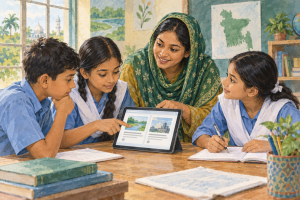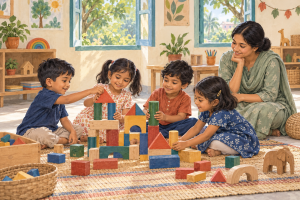
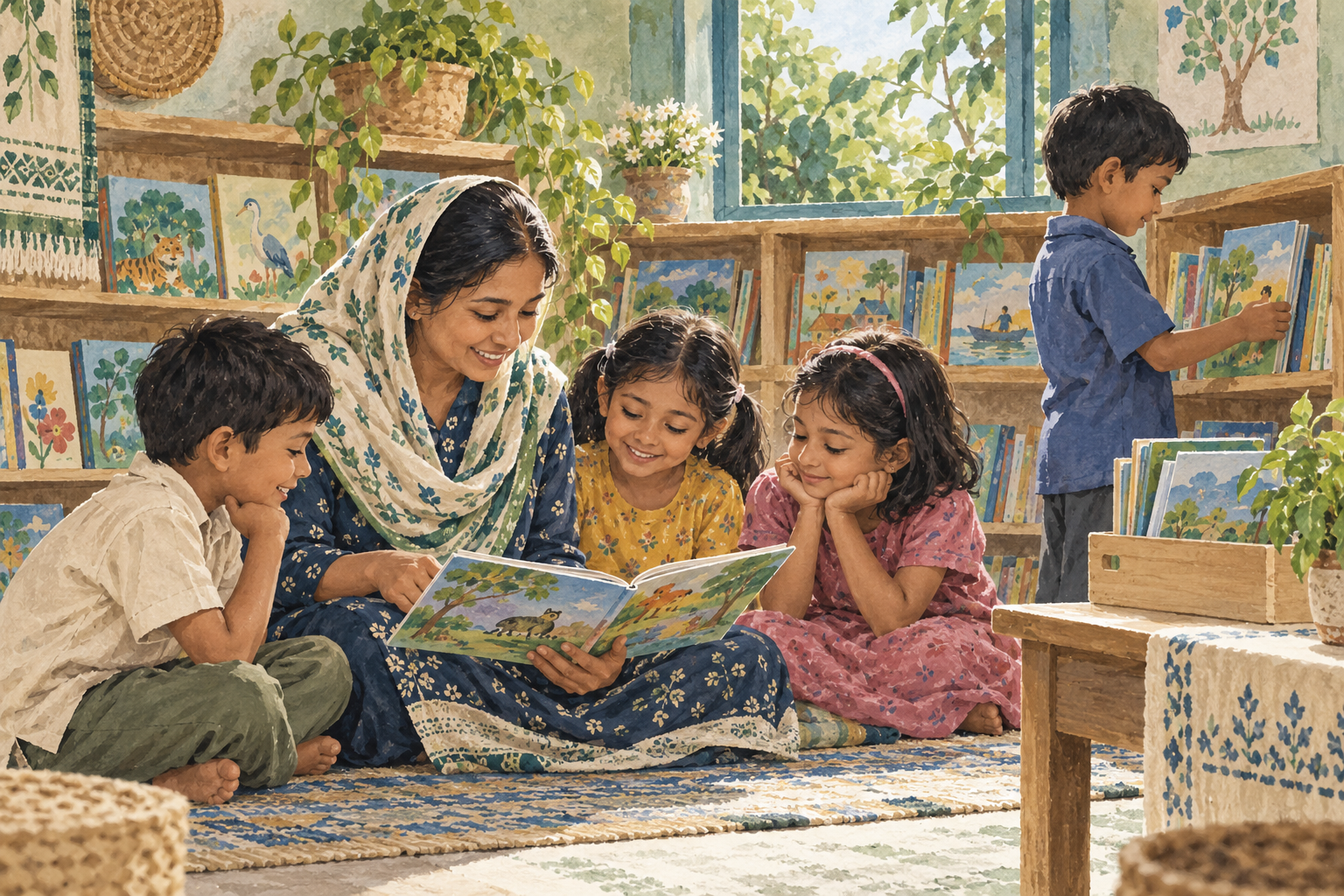
Supporting reading in Bangladesh involves more than delivering books: children need opportunities to choose them, hear stories and return to books regularly. A reading corner is not complete when a shelf is installed. Deciding what to offer, when to open and who will care for the collection helps make books part of everyday life.
Ideas from classrooms and community libraries
In 2023, Room to Read described a classroom-library pilot in Bangladesh combining children’s books, read-aloud and independent reading activities, and teacher training. Source: Room to Read’s classroom-library example.
IREX’s account of Beyond Access Bangladesh describes child-friendly reading spaces in community libraries, with librarians involving parents and teachers. Source: IREX’s community-library project account. These are other organisations’ examples, not KIZUNA programme results.
1. Select books for a shelf children can choose from
The following are practical planning examples, not a single method for every school. Start by asking about children’s ages, reading experience and interests. Consider different entry points, such as stories, nature, vehicles and everyday life. This helps avoid filling the shelf only with books adults want children to read.
Children of the same age may want different things: one may enjoy a short picture book, while another wants a longer story. A small selection with different levels of difficulty can be adjusted after observing children’s responses. Trying displays that show covers and clear signs for books available to borrow can make the first choice easier to plan.
2. Connect read-aloud sessions with independent reading
For example, a short story read aloud once a week could be followed by time to revisit interesting pages. Questions such as “Which picture do you like?” or “What might happen next?” leave room for different answers. Instead of requiring a written response from everyone, allow talking, pointing or quietly reading again.
Agreeing on a time and place for independent reading can also keep books available when the usual reader is absent. Alongside introducing new books, leave room for children to choose the same book again. Rather than competing over the number of books read, begin by asking which reading experiences they enjoyed.
3. Make borrowing and returning manageable
The UNESCO Institute for Lifelong Learning’s account of Jordan’s We Love Reading describes lending books home after weekend read-aloud sessions. This is not a Bangladeshi example, but it illustrates a link between shared sessions and reading at home. Source: UNESCO UIL’s programme account.
If lending is introduced, one option is to number books and keep a simple record of borrowing dates and expected returns. Discuss whether books can be stored safely at home, and retain the option to read on site. Agreeing in advance how to respond to late returns or damage can help avoid inconsistent treatment by different staff.
4. Include repairs and staff handovers
To keep a reading corner running, decide who opens it, where books belong and when to check for damage. Allow for repair materials and replacement costs alongside purchases. When responsibilities change, pass on a book list, lending arrangements and the next items requiring attention.
Useful review questions include whether the corner opened as planned, which books were chosen repeatedly and why others were rarely picked up. More borrowing does not, by itself, demonstrate better reading comprehension. First examine how opportunities to use books have changed, without automatically treating this as evidence of improved academic performance.
Frequently asked questions
Do we need a large library room to begin?
A small space, such as a classroom corner, can be considered. Plan suitable storage, times when children can use it and a person to manage it together. The aim is a usable space that stays available, rather than a large shelf that remains closed.
Does an increase in borrowing prove the support worked?
It can indicate wider opportunities to borrow books, but does not reveal enjoyment or understanding by itself. Use children’s views and the time available for reading alongside borrowing records to review how the corner operates.
For KIZUNA’s current work, see its support activities. If you are considering cooperation involving books, please contact KIZUNA about needs before buying or sending items. This article is not an appeal for book donations.
This explainer and its operational examples draw on public sources. It is not field reporting or a report of results from a KIZUNA library programme. Sources checked: 2 October 2026.