Preparing for flood-related school closures in Bangladesh means planning for safe buildings, materials children can use during closures, communication with schools, and learning recovery afterwards. This article considers preparation in three stages: before a disruption, while schools are closed, and after classes resume.
Flooding affects more than school buildings
On 21 June 2024, UNICEF reported that more than 810 government schools in Bangladesh’s north-eastern Sylhet division had been flooded and almost 500 were serving as shelters. Schools were on an Eid holiday at the time. This example shows both the damage to facilities and the role schools can play in sheltering communities. These figures describe that event, not the current flood situation. Source: UNICEF’s June 2024 statement.
Receding water does not necessarily mean classes can restart immediately. Local partners need to establish whether buildings and routes are safe, whether teachers can reach families, and how to coordinate shelter needs with space for teaching.
Prepare facilities, management and learning
The Comprehensive School Safety Framework 2022–2030, explained by UNESCO, has three pillars: safer learning facilities, school safety and educational continuity management, and risk reduction and resilience education. Preparation therefore includes decisions and arrangements for continued learning as well as physical infrastructure. Source: UNESCO’s explanation of the framework.
The following are planning examples informed by that approach. They are neither a description of practice in every Bangladeshi school nor a report on KIZUNA projects. Actual arrangements must reflect local school and government decisions and the circumstances of communities and families.
1. Before a disruption: agree on communication and alternatives
Agree on who will communicate school closures and how families can check information if the usual channel fails. Find out which phones or other channels caregivers can use. Designated staff should manage family contact details only as needed; they do not need to be placed on public lists.
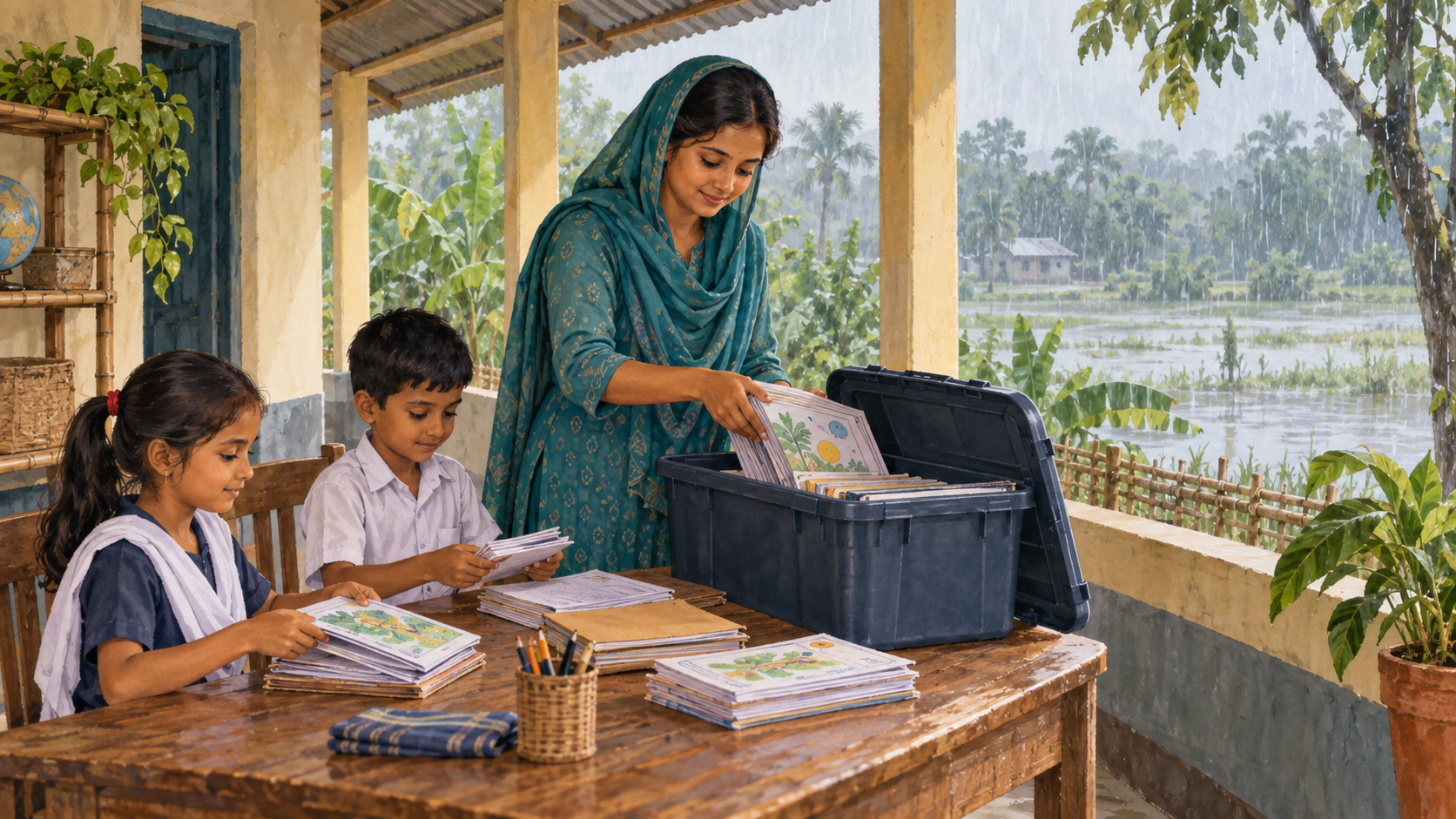
Short revision sheets linked to current lessons are one option that can work without electricity or an internet connection. Alongside the quantity of materials, consider storage, safe opportunities for distribution, and who will explain how to use them. These practical details help turn a supply plan into a usable learning arrangement.
2. During a closure: check what families can manage
When families are displaced or rebuilding daily routines, expecting normal homework from everyone may be inappropriate. Check whether children have materials, time and a place to learn, then discuss short activities or revision that can be done orally. An unsubmitted assignment alone should not be treated as a lack of motivation.
If online lessons are offered, check whether devices are shared and whether charging and data costs create barriers. Providing comparable content on paper and online is one possible way to offer a choice. Safety comes first: collecting materials must not require a dangerous journey.
3. After reopening: distinguish opening classrooms from restoring learning
Once classes resume, brief conversations and revision activities can help identify where learning stopped and what needs to be explained again. Rather than requiring everyone to catch up at once, lessons can take account of different opportunities to study during the closure. Teachers also need preparation time and materials.
For example, separately recording the households that received revision sheets, the households reached by the school, and topics needing additional teaching could help improve future preparation. These are illustrative records to consider, not indicators that KIZUNA is currently collecting.
Include preparedness in education support
In September 2026, UNICEF highlighted education planning, stronger infrastructure, and continuity during and after disruptions as responses to climate hazards. Support can consider preparation for the next interruption as well as supplies for an immediate emergency. Source: UNICEF’s statement on protecting learning.
Potential supporters can ask local coordinators where gaps exist in material storage and replacement, communication, or catch-up teaching. See KIZUNA’s support activities for information on current work. This article does not announce a KIZUNA flood response or a dedicated flood fundraising appeal.
Frequently asked questions
Is switching to online lessons enough during a school closure?
Access to connectivity, electricity and devices differs between households. Consider alternatives such as printed materials alongside ways for children to ask questions and for teachers to check their learning.
Does support end when a school building can be used again?
Repairing facilities and restoring learning are separate checkpoints. Alongside a safe reopening, discuss with the school whether revision time, teacher preparation or further contact with families is needed.
This article provides an explanation and planning examples based on public sources. It is not field reporting or a report of project results. Sources checked on 1 October 2026.