The language a child learns in is an important part of understanding education in Bangladesh. Mother-tongue-based multilingual education builds on languages children know from home while helping them learn additional languages. This article explores how home languages can connect with learning at school.
What is mother-tongue-based multilingual education?
A mother tongue is a language acquired from early childhood through family and everyday relationships. Some children grow up with more than one language. Here, the emphasis is on starting with languages each child understands well.
UNESCO’s 2025 guidance on multilingual education emphasizes learning in languages learners understand. Languages of instruction, materials and teacher support need to be considered together. Source: UNESCO, Languages matter.
Recognizing Bangladesh’s linguistic diversity
Alongside Bangla, languages are passed down within Bangladesh’s different communities. One example is Of Roots and Heritage, an anthology introduced by UNESCO in which young Chakma and Tripura writers document their communities’ cultures and experiences. The collection is presented in Bangla, Chakma, Tripura and English. It illustrates linguistic and cultural diversity; it does not show that the same teaching approach is used in every school. Source: UNESCO’s introduction to the anthology.
For people supporting education, a useful starting point is to ask which languages children use at home and in class, rather than assuming a mother tongue from nationality or appearance. Even within one area, children may differ in the languages they speak comfortably, the scripts they recognize and their learning experiences.
Separating understanding of a subject from understanding of a question
UNESCO explains that proficiency in the language used for instruction and literacy matters for learning. Source: UNESCO, Promoting Literacy in Multilingual Settings.
Imagine a child who can count objects but struggles with the wording of a question. A score alone would not distinguish understanding of numbers from understanding of the question. This is an illustrative example, not an observation from KIZUNA’s work. Exploring the task with pictures, objects and a language the child can explain things in may help identify what support is needed.
Planning the language bridge before sending materials
UNESCO’s practical recommendations include materials in learners’ languages, teacher preparation and training, and participation by families and communities. Source: UNESCO’s recommendations for multilingual education.
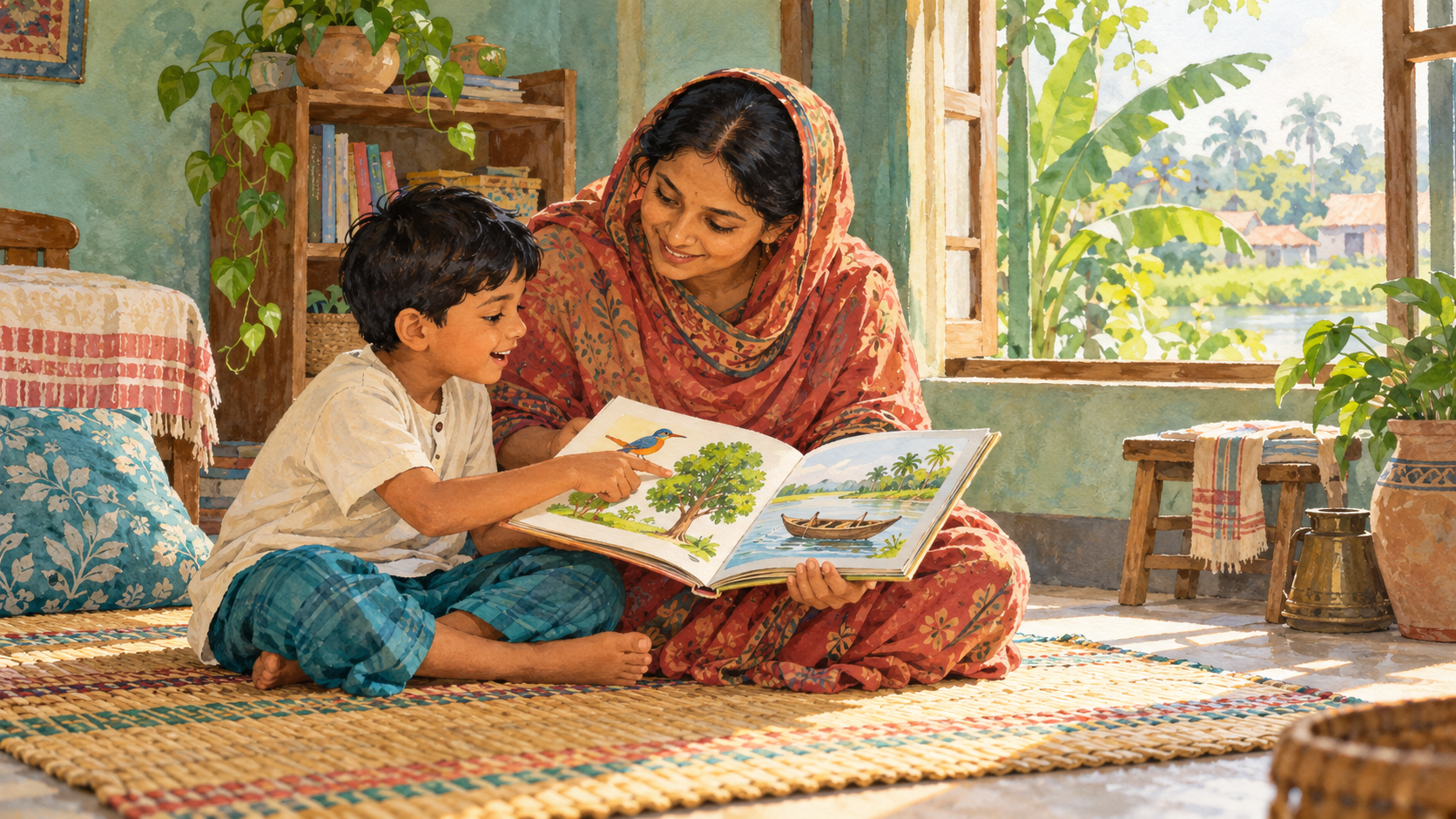
Applied to book support, this suggests discussing who will read aloud or explain a book, as well as how many translated copies to provide. Local teachers and speakers of the language can help check whether the wording and illustrations fit everyday experiences. Thinking through how familiar languages will connect with new school languages is part of preparing materials for use.
Frequently asked questions
Does mother-tongue education get in the way of learning English?
Using a home language does not mean giving up other languages. UNESCO explains that education grounded in home languages can support additional language learning. Timing and methods should reflect children’s understanding and their educational setting. Source: UNESCO’s explanation of multilingual education.
Is Bangla every child’s mother tongue in Bangladesh?
No. As the example above shows, languages including Chakma and Tripura are also passed down within communities. It is important to ask children and families about language use rather than decide on the basis of a place name alone.
Can Japanese picture books be useful without translation?
Children may enjoy the pictures, but that does not automatically make a book suitable for literacy instruction. Before selecting books, discuss children’s ages, languages, the people who will read or explain them, and the materials actually needed with the receiving organization.
For the broader context, see Education Support in Bangladesh: Helping Children Keep Learning.
This educational explainer draws on public sources. It does not claim that KIZUNA operates a mother-tongue education programme or report results from a specific project. Sources checked: 30 September 2026.